
Budget Package
Authentic tea house trek
From$690pp
- 1 trekker
- $980
- 2-3 trekkers
- $850
- 4-5 trekkers
- $760
- 6+ trekkers
- $690
- Standard tea houses
- Shared transport
- Basic operational support
- Licensed guide
- Shared porter
Autumn 2026 departures now open — early-bird 10% off until Sep 15
ANNAPURNA REGION
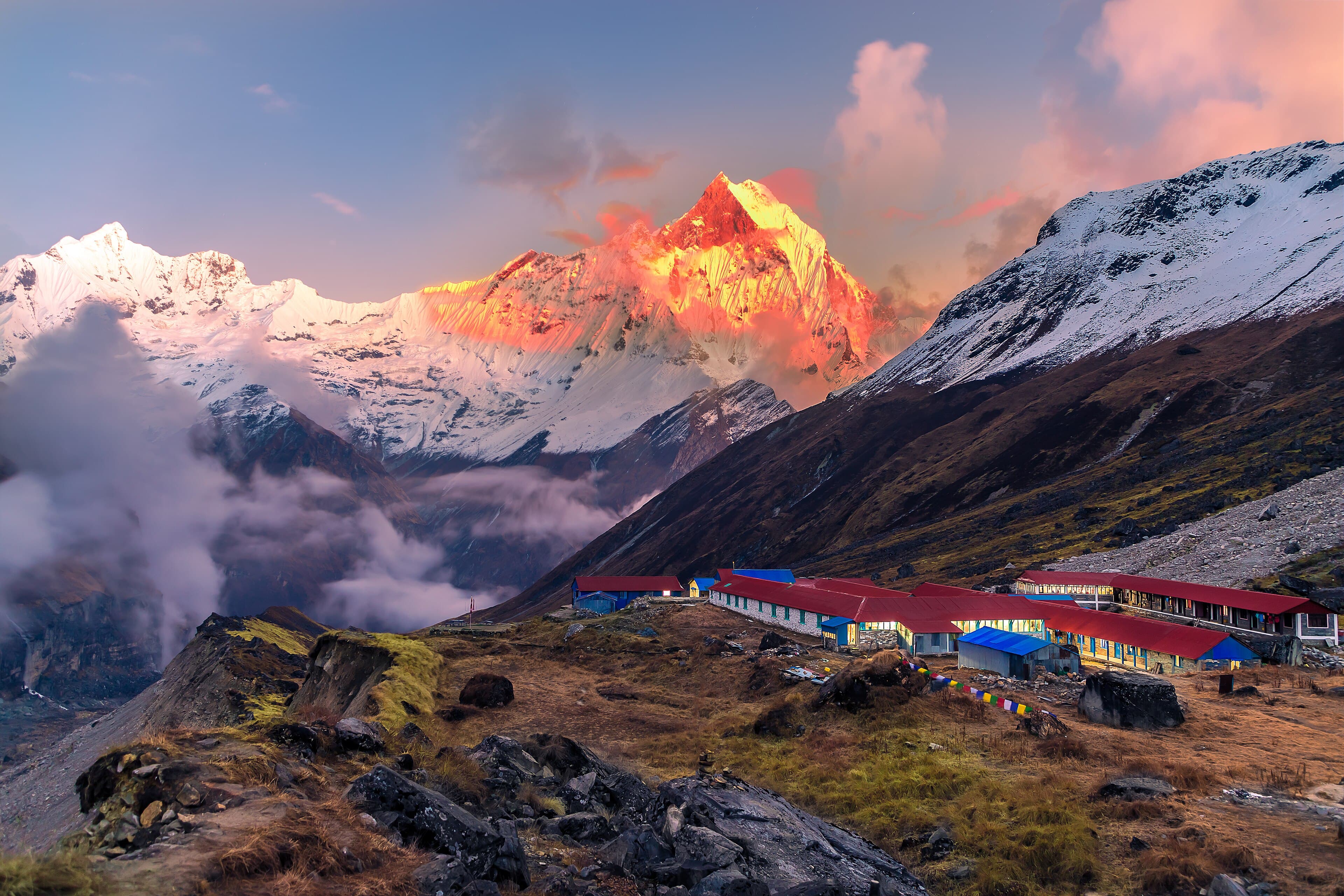
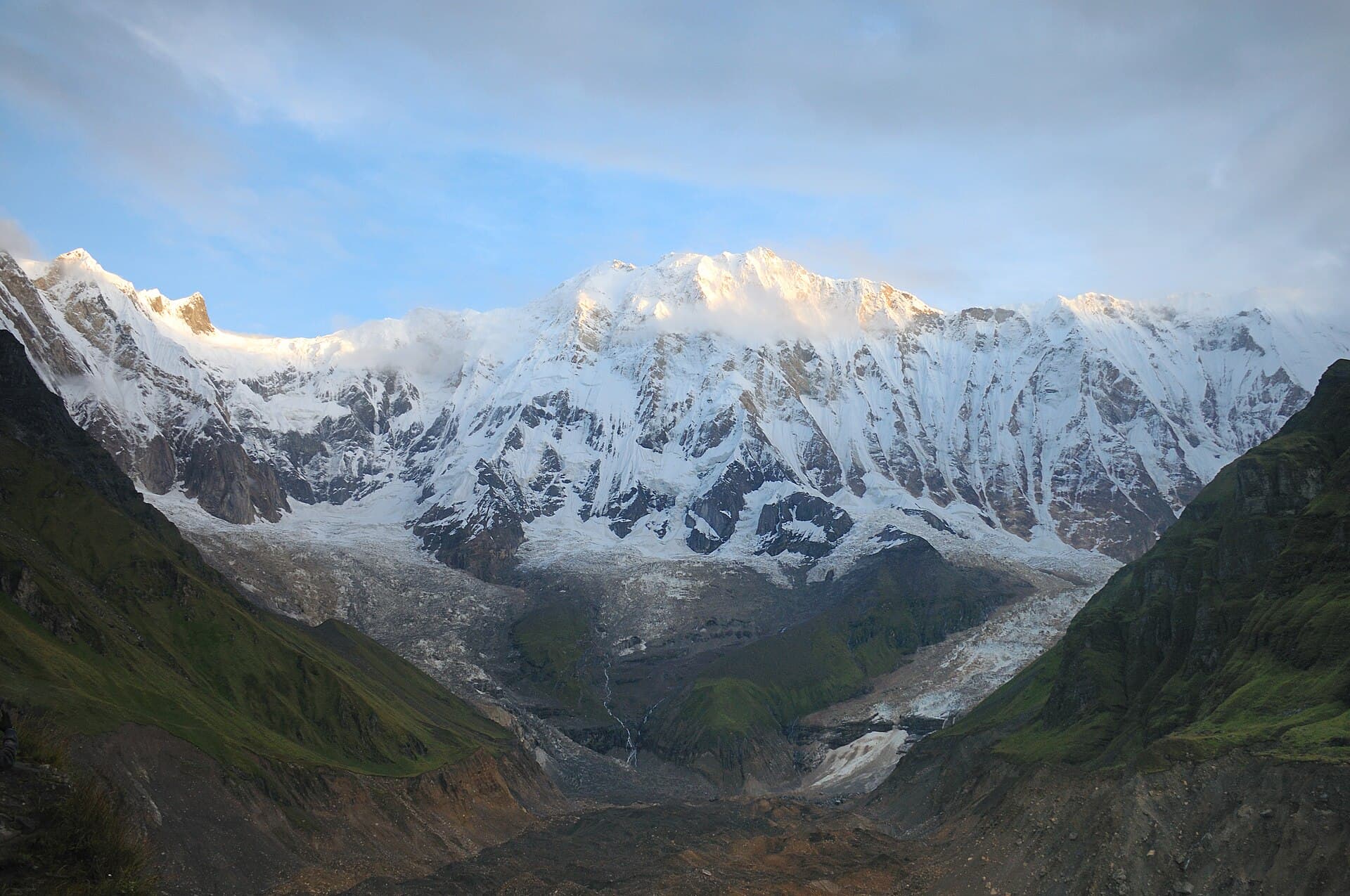
Photography: Mithunkunwar9, Josep M. Gracia (CC BY-SA 4.0), via Wikimedia Commons
The Himalayas reveal themselves slowly-
First through the sound of distant rivers rushing beneath suspension bridges, then through cold mountain mornings where prayer flags dance in the wind above quiet villages. Somewhere between the forests of rhododendron and the smell of woodfire drifting from tea houses, you begin to understand why people return to Nepal again and again. And then one morning, just as the sun rises over the snow-covered peaks, Annapurna finally appears — vast, silent, and impossibly beautiful.
This is not just a trek. It feels like walking into the soul of the Himalayas.
Annapurna Base Camp is more than a trekking destination. It is one of Nepal’s great Himalayan journeys — a trail woven through ancient Gurung and Magar villages, sacred mountains, glacier valleys, and landscapes that have shaped local culture for centuries. Long before trekking maps existed, these trails connected remote mountain communities and Himalayan trade routes between the lowlands and Tibet. Even today, life here still moves with the rhythm of the mountains.
The trek begins gently through terraced farmlands, waterfalls, and warm river valleys before slowly climbing into deeper wilderness. Tea houses appear like small mountain refuges along the trail, where trekkers gather around stoves sharing stories, dal bhat, and surprisingly emotional relationships with milk tea. Somewhere near Ulleri’s endless stone staircases, most people begin questioning both gravity and their life choices — usually while a smiling local guide calmly says, “Only little bit more.”
This phrase has motivated generations of trekkers and emotionally destroyed many knees.
Thankfully, the mountains make every step worth it.
As the altitude rises, forests become quieter, the air sharper, and the landscapes more dramatic. The trail winds through bamboo forests, hanging cliffs, glacier-fed rivers, and alpine valleys beneath the sacred Machhapuchhre — the famous “Fishtail Mountain” believed by locals to be the home of Lord Shiva. Unlike many peaks in the Himalayas, its summit remains unclimbed out of spiritual respect, reminding visitors that in Nepal, mountains are not simply conquered — they are honored.
And then comes the Annapurna Sanctuary itself.
A hidden world of snow, silence, glaciers, and giant Himalayan walls rising in every direction.
Standing at Base Camp beneath Annapurna I (8,091m) feels less like arriving at a destination and more like stepping into another world entirely. The wind moves softly through prayer flags while the mountains glow gold beneath the early morning sun. For a few quiet moments, everything else disappears.
But what makes this trek unforgettable is not only the mountains.
It is the warmth of the people. The laughter shared in tea houses after long trekking days. The sound of prayer wheels spinning in quiet villages. The way strangers become friends somewhere between soup bowls and sunrise viewpoints. Even the WiFi becomes part of the adventure — occasionally available, spiritually unreliable.
At TravelNepal.asia, we believe trekking should feel personal, authentic, and deeply connected to the culture of the Himalayas. Our guides are not simply leading a route; they are sharing the mountains they grew up beside, the stories hidden within these valleys, and a way of life shaped by the high Himalayas themselves.
Because the Annapurna Base Camp Trek is not just about reaching 4,130 meters.
It is about waking up beneath the highest mountains on Earth and realizing how beautifully small you are within them.
And long after the trek ends, that feeling somehow stays with you.
WHAT YOU GET
THE TRAIL
The altitude reached each day, taken from the itinerary. The acclimatisation days are the flat stretches — they are what make the high days safe.
Nayapul → Nayapul · high point Annapurna Base Camp (4,130m)
DAY BY DAY
12 days · tap any day for the full detail
Welcome to Nepal.
Upon arrival at Tribhuvan International Airport, our team will greet you and transfer you to your hotel in Kathmandu. Depending on your arrival time, you can either relax after the flight or wander through the lively streets of Thamel — a colorful maze of trekking shops, cafes, hidden courtyards, and backpackers pretending they’re “only here for culture.”
In the evening, we conduct a short trek briefing covering permits, gear checks, safety information, and final preparations.
After breakfast, begin the scenic drive west toward Pokhara along the Prithvi Highway.
The road follows rivers, terraced hillsides, waterfalls, small villages, and dramatic landscapes throughout the journey. Expect beautiful scenery, occasional traffic, and enough roadside tea stops to become emotionally attached to milk tea.
Pokhara itself feels like a reward — peaceful lakeside cafes, mountain reflections on Phewa Lake, and a relaxed atmosphere before the trek begins.
After breakfast, drive to Nayapul where the trek officially begins.
The trail passes through villages, terraced farmlands, suspension bridges, and riverside paths. The lower Annapurna region feels warm, green, and culturally rich.
Today’s walk is relatively gentle, allowing your body to adjust gradually while enjoying the first real taste of trekking life.
Today begins with the legendary Ulleri stone staircase — over 3,000 steep stone steps that test both your legs and your relationship with gravity.
Thankfully, the trail soon enters beautiful rhododendron and oak forests. During spring, these forests explode with red and pink blossoms, creating one of Nepal’s most beautiful trekking sections.
After a long but rewarding climb, you arrive at Ghorepani, a vibrant mountain village surrounded by Himalayan views.
Before dawn, hike uphill to Poon Hill — one of Nepal’s most famous viewpoints.
As sunrise touches the Himalayas, the peaks of Annapurna, Dhaulagiri, Machhapuchhre, and Nilgiri slowly glow gold above the clouds. It’s cold, peaceful, emotional… and somehow everyone forgets the early wake-up instantly.
After breakfast at Ghorepani, continue trekking through forests and ridges toward Tadapani.
The trail descends through dense forests before climbing toward Chhomrong — one of the largest Gurung villages in the Annapurna region.
Stone-paved pathways, terraced hillsides, and stunning views of Annapurna South dominate today’s journey.
Chhomrong also marks the entrance into the Annapurna Sanctuary itself.
The day begins with a steep descent to Chhomrong Khola before climbing back upward through bamboo forests and narrow river valleys.
The landscape becomes wilder and quieter as the trail enters deep forested sections filled with waterfalls, hanging cliffs, and rushing rivers.
The air grows cooler as altitude slowly increases.
Today is the biggest and most rewarding day of the trek.
The trail climbs steadily through Deurali before reaching Machhapuchhre Base Camp (MBC). Suddenly, the valley opens dramatically into the Annapurna Sanctuary — a massive natural amphitheater surrounded by towering Himalayan giants.
The final walk to Annapurna Base Camp feels surreal.
You are now standing directly beneath Annapurna I (8,091m), surrounded by snow, glaciers, and endless peaks in every direction.
Wake early for one of the most unforgettable sunrises in the Himalayas.
Golden light slowly spills across Annapurna I, Hiunchuli, Gangapurna, and Machhapuchhre while the sanctuary glows beneath the morning sky.
After breakfast, begin the long descent back through MBC, Deurali, Himalaya, and Dovan toward Bamboo.
The downhill is easier on the lungs… slightly less friendly on the knees.
Continue descending through Chhomrong before reaching Jhinu Danda.
The reward today is simple but legendary:
Natural hot springs beside the river.
After days of trekking, soaking in warm mineral water surrounded by jungle and mountains feels almost suspiciously perfect.
The final trekking day follows gentle trails and villages back toward Nayapul.
After saying goodbye to the mountains (temporarily — the Himalayas usually convince people to return), drive back to Pokhara.
A proper shower, soft bed, coffee, and celebration dinner suddenly feel like luxury beyond imagination.
After breakfast, drive back to Kathmandu through Nepal’s scenic hills and river valleys.
Depending on your flight schedule, enjoy some final shopping, cafes, or quiet moments before departure.
IF THINGS CHANGE
The Himalaya is unpredictable and we plan for it. Client safety comes before the summit, every time — no guest is pushed higher with dangerous symptoms.
Our priority is always:
Client Safety Before Summit
Guides continuously monitor:
No guest is pushed higher with dangerous AMS symptoms.
Safety decisions are always final in the mountains.
Every group carries:
Nearest medical support:
We strongly discourage:
Healthy staff create safer expedition
CHOOSE YOUR LEVEL
Every package walks the same trail with the same licensed guides. What changes is the standard of hotels, transport and support around it. Prices are per person and fall as the group grows.
Larger groups reduce the guide cost per person, share transportation, spread porter allocation, and lower operational overhead and admin costs. A solo trek still requires a full guide setup, operational support, permit handling and emergency coordination — which is why solo prices remain significantly higher.
Authentic tea house trek
From$690pp
Our recommendation
Our recommended package
From$920pp
The fullest version of the trek
From$1,320pp
THE DIFFERENCE
The Himalayas are unpredictable, and we take that seriously. From altitude monitoring and weather-based itinerary adjustments to emergency evacuation coordination and backup transportation plans, your safety is always our highest priority. We don’t just guide treks — we prepare for the unexpected before it happens.
We don’t just organize treks — we share the mountains, culture, stories, and local lifestyle that we grew up with.
Our guides are government-licensed, highly experienced, and trained to handle high-altitude trekking with safety, confidence, and care.
We prioritize proper acclimatization, daily health monitoring, oxygen saturation checks (oximeter), and responsible pacing throughout the trek.
We guide like real people — supportive, flexible, humorous, and understanding. Sometimes a good laugh is just as important as a good rest stop
Enjoy warm breakfasts, lunches, dinners, and tea every day with carefully selected tea houses serving reliable and energy-filled mountain meals.
We choose clean and comfortable tea houses with the best available facilities to help you rest properly after long trekking days.
Smaller groups allow us to give more personal attention, flexible pacing, and a more meaningful trekking experience for everyone.
Our hardworking porters help carry your heavy luggage so you can enjoy the journey with more comfort and energy.
From hidden viewpoints to local traditions and village stories, we help you experience the Himalayas beyond the typical tourist route.
We provide fast replies, honest advice, and organized support before and during your trek to make everything stress-free and smooth.
From airport pickup to mountain transportation and accommodation coordination, we handle the details so you can focus on the adventure.
We genuinely care about your experience, comfort, safety, and memories from the moment you arrive until your departure.
The mountains are beautiful, but the connections, laughter, challenges, and shared moments are what truly make the journey unforgettable.
Trekking isn’t just business for us — it’s part of our identity, culture, and way of life.