
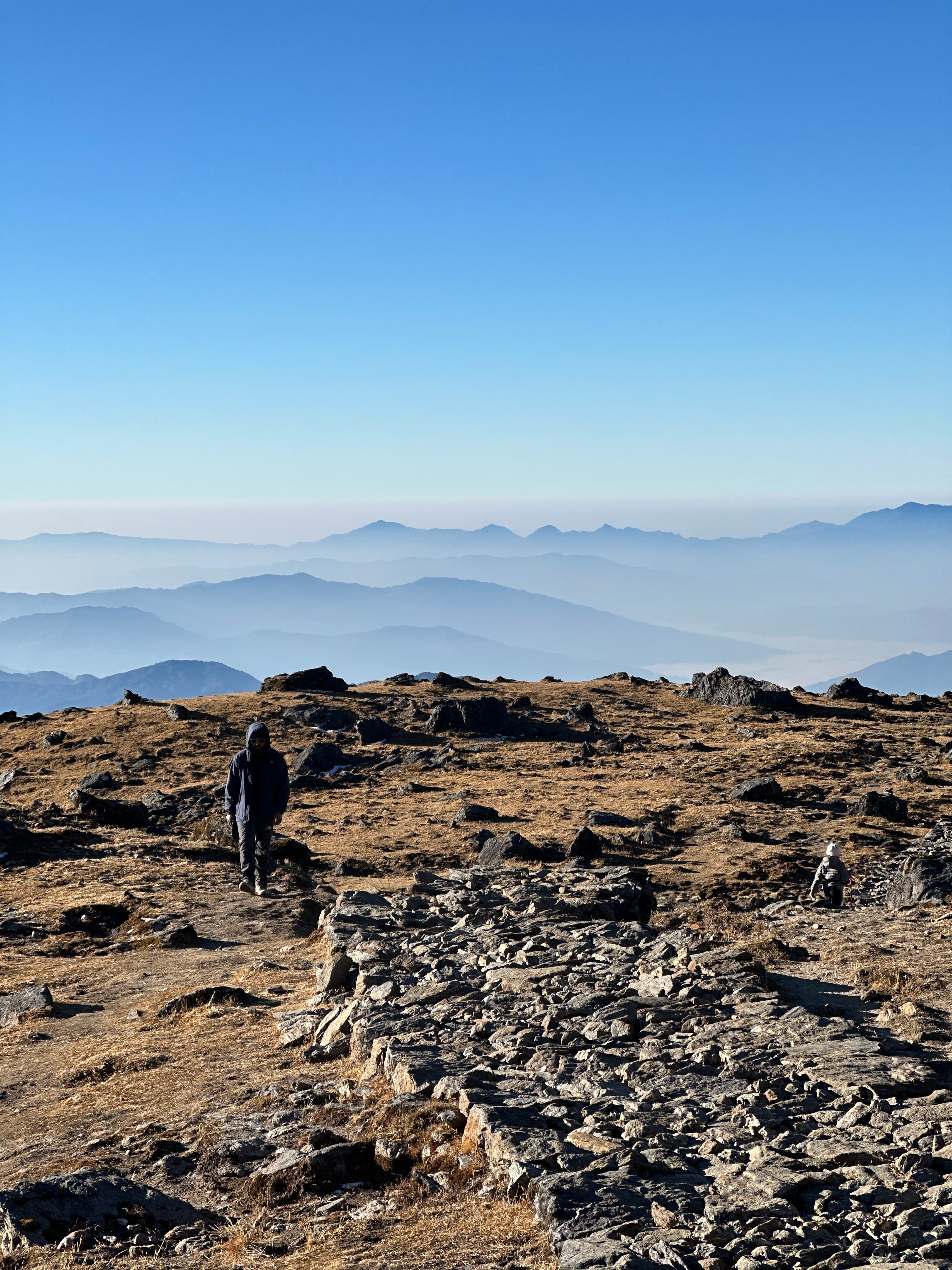
October is the reason people book a year ahead. The monsoon has washed the haze out of the air, the peaks are white from the summer snows, and the odds of a clear morning at Kala Patthar are as good as they get. It is also colder than most first-timers expect, and the mistake we see every season is a duffel packed for the weather people imagine rather than the weather that is actually there.
The temperature you are packing for
The Khumbu in October is not one climate. It is several, stacked on top of each other, and you walk up through all of them in a week.
At Lukla, 2,860 m, expect daytime temperatures in the mid-teens Celsius and nights around freezing. By Namche, 3,440 m, days are pleasant in the sun and cold the moment you step into shade. At Dingboche, 4,410 m, and above, the pattern that governs everything is this: it can be 15°C in direct sun at midday and −10°C an hour after the sun drops behind the ridge. Late October nights at Gorak Shep can reach −15°C.
The sun is the other half. At 5,000 m there is far less atmosphere filtering ultraviolet, and snow reflects it back up at you. People get burned under their chin and inside their nostrils. It is not a detail.
Layers, and why three is the number
Base layer. Merino wool or a synthetic. Two sets — one walking, one clean and dry for sleeping. Never cotton: it holds sweat against your skin and stops insulating the moment you stop moving.
Mid layer. A fleece or light synthetic jacket for walking in, plus a down or synthetic jacket for standing still. These are different garments doing different jobs. The walking layer needs to breathe; the standing-still layer needs to trap air. Trying to make one garment do both is why people are cold at breakfast and soaked by lunch.
Outer layer. A windproof, water-resistant shell. October is the dry season and you may never see rain — but wind on an exposed ridge at 4,500 m removes heat faster than temperature alone suggests, and a shell is what stops it.
The down jacket is worth being specific about. You want something rated for around −10°C, and you will wear it every evening from Dingboche upward, in the dining room as much as outside. It is the single item people most often under-buy.
Feet
Boots that are already broken in. Not new, not borrowed. The trail is stone, and blisters on day two shape the entire trek.
Mid-weight, above the ankle, with a stiff-enough sole to be comfortable on rock for six hours. Full mountaineering boots are unnecessary for a teahouse trek and will make your feet miserable.
Four or five pairs of wool socks. A pair of camp shoes or sandals — after eight hours in boots, having something else to put on in the teahouse matters more than the weight.
Sleeping
Teahouses provide a bed, a mattress and usually a blanket. They do not heat the bedrooms. The dining room has a stove that is lit in the evening; your room does not.
Bring a sleeping bag rated to around −10°C, or hire one in Kathmandu, which is cheaper and perfectly normal. A silk or cotton liner adds a few degrees, keeps the bag clean, and is worth its negligible weight.
A hot water bottle is the piece of gear experienced trekkers bring and first-timers do not. Fill it from the kitchen at dinner, put it in the bottom of your bag, and the night is transformed.
The small things that matter more than they should
Sunglasses rated for glacier use — category 4 if you can, wraparound if not. Sun on snow at altitude will burn your eyes, and snow blindness is genuinely disabling.
High-factor sunscreen and lip balm with UV protection. Reapply more often than feels sensible.
A headtorch, with spare batteries. Cold flattens batteries fast, so keep them in your sleeping bag overnight.
A one-litre bottle plus either purification tablets or a filter. Buying bottled water up the valley is expensive, and every empty bottle has to be carried back down by someone. Boiled water is sold at every teahouse and works out cheaper.
A power bank. Charging costs money in the teahouses, increases with altitude, and is not always available. Cold also drains phone batteries quickly.
Basic personal medication, blister plasters and rehydration salts. Your guide carries a comprehensive first-aid kit; what you carry is the personal layer above that.
How much, and who carries it
Porters carry one duffel per two trekkers, and the working limit is 15 kg per porter. That is not a bureaucratic number — it is a weight a person carries up a valley on their back, and it should shape what you pack.
Your daypack carries what you need between teahouses: water, a warm layer, shell, sun protection, camera, snacks. Twenty to thirty litres is plenty.
The reliable test is this: lay everything out, then remove a third of it. Almost nobody comes back from a teahouse trek wishing they had brought more.
What you do not need
A tent, a stove or cooking equipment. You are sleeping and eating indoors every night.
Technical climbing gear. There is no rope work on a teahouse trek to Everest Base Camp.
More than a week of clothes. Laundry is available lower down, and above Namche everyone is wearing the same thing every day. Nobody is looking.